Archive edition. AsiaVIDEO ended in 2018 and is no longer active. The films stay online; the travel tips were last updated in October 2026.

Stones, roots and a long silence

CambodiaAngkor Wat, Siem Reap and Cambodia: documentary and travel tips

Filmed
2008 and 2013
Position
13.4125° N, 103.8670° E
Status
Archived film, tips checked October 2026

From Bangkok it is barely an hour in the air, and yet Cambodia feels like another clock. Siem Reap takes its time, and it lives next door to the largest temple complex ever built.

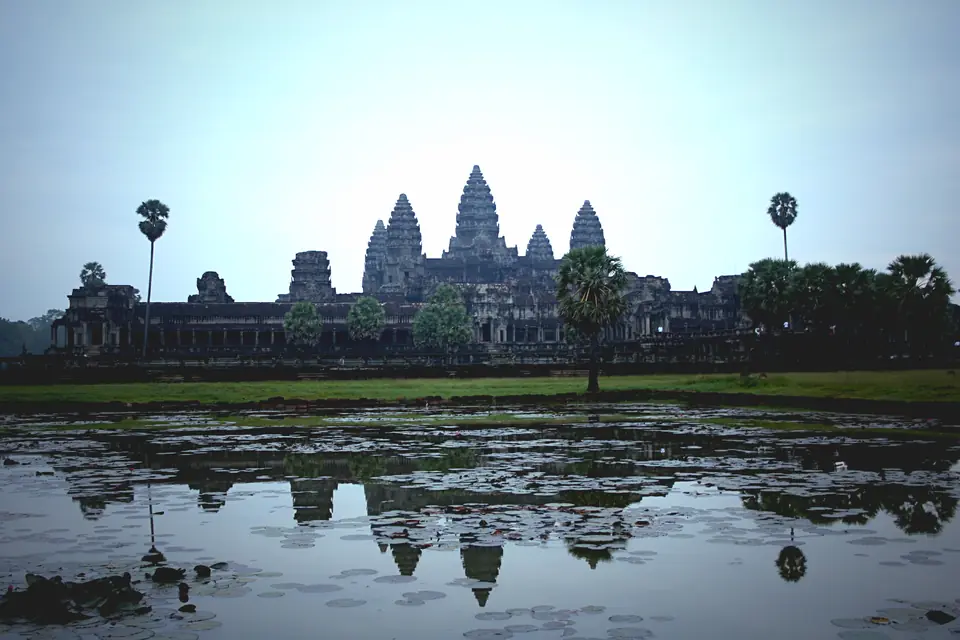
I shot the Angkor footage back in 2008, so the film is a bit of a time capsule. Around the temples a lot has changed since, but the place itself has not: towers rising out of the trees, carved goddesses on every wall, the forest slowly taking things back. If you care even a little about history, go once in your life.

Then there is Phnom Penh, which tells a different and much harder story. I think a trip here should include both.

Map of the Cambodia tripBangkokSiem ReapTonlé SapPhnom PenhSihanoukville
Bangkok to the sea, one pin at a time.
Footage from 2008. Plays from YouTube in privacy-enhanced mode, only after you press play. Watch on YouTube

How I would plan it

Three or four days around Angkor, two in the capital, and the coast only if you still have time left.

Getting there

Take the plane

Cheap flights from Bangkok land in Siem Reap after about an hour. Going by land through Poipet costs less, takes most of a day and has a long reputation for tricks at the border. If your holiday is short, fly.

One change since my visit: Siem Reap has a new airport (SAI), opened in 2023 and roughly 50 km out of town. Count on about an hour to your hotel by shuttle or taxi, and fix the taxi price first.
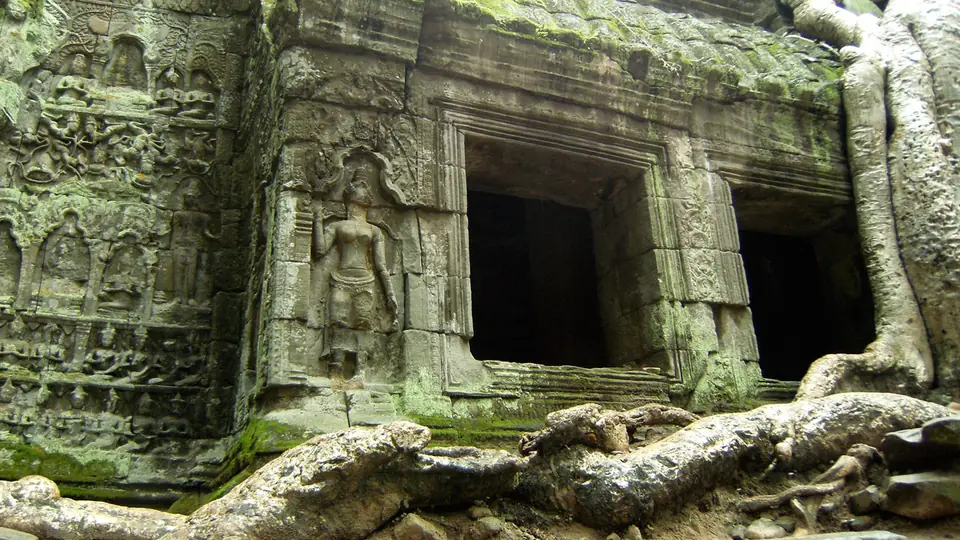
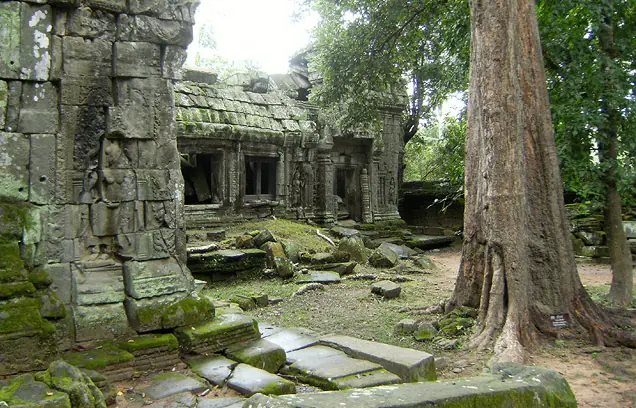
Stone doorway with a carved apsara, half covered by tree roots

Siem Reap

Angkor, early

Everybody goes for sunrise at Angkor Wat, and it is worth the alarm clock. A simple trick: once the sun is up, move on while the others go for breakfast, and you get the Bayon with its giant smiling faces almost to yourself. Ta Prohm, the temple held together by tree roots, is the one people remember. Banteay Srei, with its pink carved stone, is a little further and very worth it.

  • Hire a tuk-tuk and its driver for the whole day. On a bike, stick to the small circuit.
  • Shoulders and knees must be covered to enter; choose light fabric, it gets hot.
  • Bring water and something to eat: inside the park everything costs more.
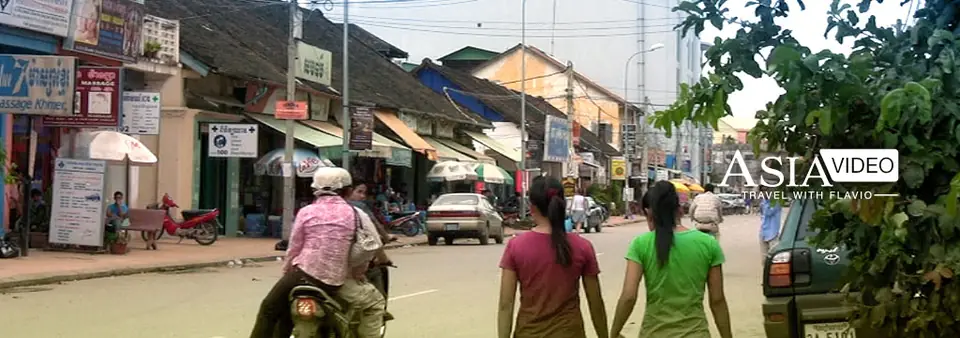
A street in Siem Reap with shops and tuk-tuks

Tonlé Sap

A lake that changes size

South of town lies a huge lake that grows and shrinks with the rains, and whole villages built on stilts or floating on it. Go late in the day by boat, when the light turns gold. Do not expect clear water; go for the life along the banks.

At night, Siem Reap’s Pub Street is noisy and cheap, and the markets around it sell everything. Haggling is part of the game here; keep it friendly.

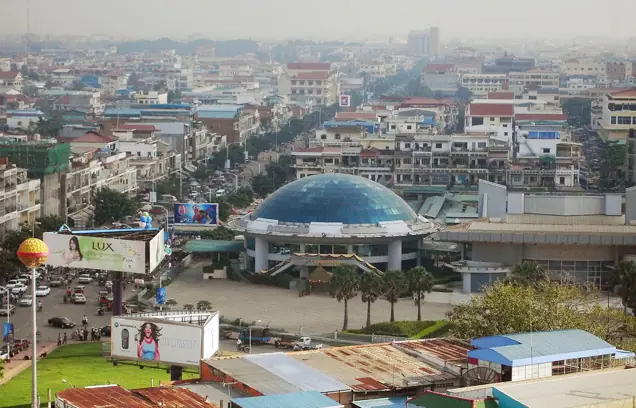
Aerial view of Phnom Penh with the dome of the central market

Phnom Penh

Gold roofs and a heavy past

The Royal Palace, and next to it the Silver Pagoda, whose floor really is made of silver tiles. A walk on the riverfront when it cools down. The yellow art-deco dome of the Central Market.

And then Tuol Sleng, also called S-21: a school that the Khmer Rouge turned into a prison, now a museum. Give it at least two hours and, if you can, visit the Choeung Ek killing fields outside the city as well. It is painful. It also explains the country better than any guidebook.

New since my trip: Phnom Penh’s flights moved in September 2025 to Techo International, a new airport south of the city.

The coast

Head for the islands

Years ago I would have sent you to Sihanoukville for the beach. The town has since filled up with casinos and building sites, so today I would only pass through it on the way to Koh Rong or Koh Rong Samloem. Or skip it and go to Kampot and Kep, two sleepy places by the river and the sea, famous for pepper and crab.

When to go to Cambodia

Best monthsVery hotRainy season

November to February

Dry, bright mornings, heat you can live with. This is the busiest time at Angkor, especially around Christmas and New Year.

March to May

Really hot, often over 35 °C. Do the temples at dawn, hide at lunch, go back out for the late afternoon.

June to October

Storms in the afternoon, few visitors, everything green and the moats full of water. The lake is at its biggest around September and October.

What to eat in Cambodia

Khmer cooking is softer than Thai: lots of herbs, lime, palm sugar and a strong fish paste called prahok. When I first went, menus were short. Today Siem Reap and Phnom Penh are real food cities.

  1. Fish amokfish in a coconut curry custard, steamed in a banana leaf
  2. Bai sach chroukgrilled pork on rice, what locals eat for breakfast
  3. Khmer red currycoconut, not too spicy, with bread or rice
  4. Lok lakbeef stir-fry with a lime and black pepper sauce
  5. Num banh chokmorning rice noodles with a green fish curry
  6. Crab with Kampot pepperby the sea, with the fresh green peppercorns
  7. Fruit stallsrambutan, mangosteen, dragon fruit, a coconut to drink

Before you go to Cambodia

These notes are for travelling today, not for the year the film was made. I went through them again in . Border rules change without much warning, so please confirm on the official sites below before you book anything.

Visa

Italians and other EU citizens need one. Choose between the online e-Visa (around US$36 all in, normally ready in three working days) and the visa on arrival at airports and main border posts (US$30, cash dollars, notes in good condition). Either way it is a 30-day tourist visa. Passport valid for six months with a free page.

e-Arrival card

New and compulsory: an online arrival form, filled in during the week before you land, which gives you a QR code for immigration. It is free and it is not a visa. Sites asking US$70–90 for “the visa” are middlemen, not the government.

Angkor tickets

One day US$37, three days US$62, a week US$72. Buy them at the official ticket office in Siem Reap, on the official website, or from the machines at the west gate. Angkor Wat lets people in from 5:00 for sunrise, the other temples mostly from 6:00. Passes for more than a day carry your photo.

Money

Prices are in US dollars for most things; small change comes back in riel. Torn or marked dollar notes get refused, so bring clean ones. ATMs give dollars and add a fee.

Getting around

Tuk-tuks or the Grab and PassApp apps in town. Buses and minivans between cities: Siem Reap to Phnom Penh is about six hours on the road. A domestic flight saves a day.

Health

No tap water. Repellent at dawn and dusk against dengue; malaria exists in remote forest areas. Buy insurance that includes medical evacuation, because serious cases are usually flown to Bangkok.

Respect

Covered shoulders and knees in temples and at the palace. Quiet voices at Tuol Sleng and Choeung Ek. Ask monks before taking their picture, and do not touch anyone on the head.

Plugs and phones

230 V, with A, C and G sockets. Local SIM cards cost little and are sold at the airport if you show your passport.

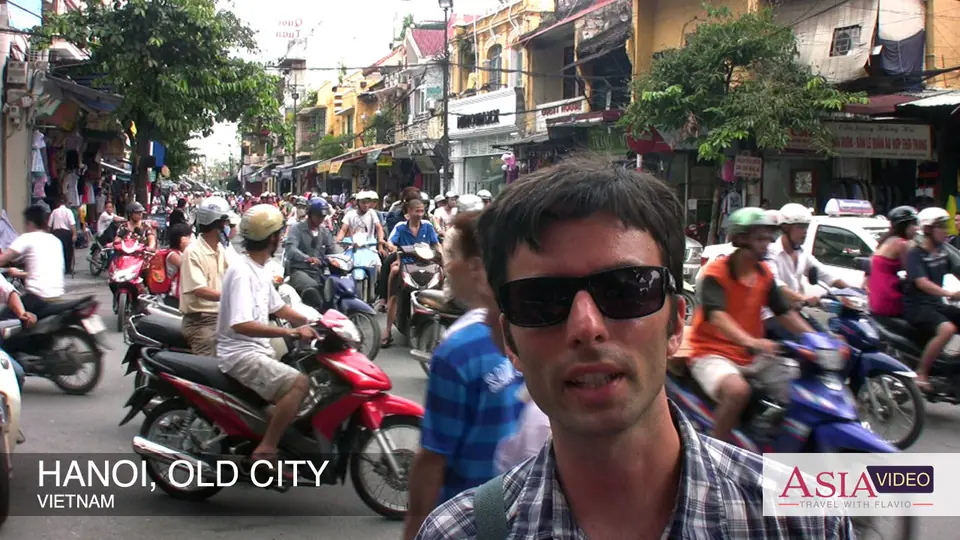
Next on the route Vietnam From Saigon to Hà Nội by rail, scooters everywhere, and a night afloat in Hạ Long Bay.

This is an archive

I made AsiaVIDEO between 2008 and 2018. Then life went in another direction, the camera ended up in a drawer, and the project stopped. No new films will appear here.

The one thing I still update is the “Before you go” box on each trip page: visas, money, transport, seasons. Last pass: October 2026. Rules change quickly, so always double-check on the official sites listed there before you book.